Automobiles
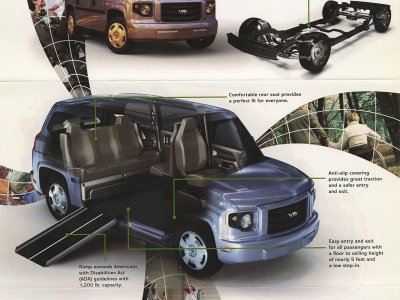
In New York City, cars, taxis, and for-hire vehicles are reliable ways for people with disabilities to get around. But they haven’t always been fully accessible. Many people with disabilities travel in standard vehicles. This includes some wheelchair users who can transfer to a seat and fold their manual chairs. People who use motorized wheelchairs need vehicles with ramps.
Owning and parking a car can be expensive in the city. Many disabled people have faced discrimination from taxi drivers who don’t want to drive them. Advocates have pushed for accessible parking, and for more accessible taxis and for-hire vehicles.
Activism Milestones
- 1947: The city began issuing special vehicle cards to disabled workers and full-time students. 75 veterans applied on the first day.
- 1972: Disabled people traveling for any reason can access the special vehicle cards. They could also get a card if another person was driving them.
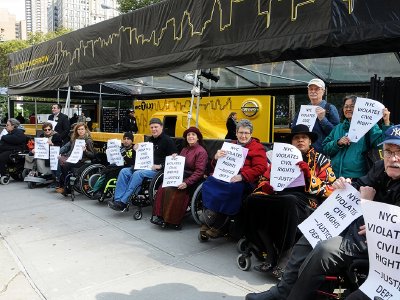
- 2011: The Taxis for All campaign filed a lawsuit after attempts to pass a city council bill to increase the number of accessible taxis failed.
- 2014: A settlement with the Taxis for All campaign required 50% of the TLC’s taxi fleet to be wheelchair accessible by 2020.
- 2015: The TLC required hearing loops for deaf and hard-of-hearing passengers in new taxis.
- 2025: TLC reaches 50% of wheelchair accessible vehicles in their “active” fleet.
- 2025: The U.S. Department of Justice sued Uber for denying rides to passengers with guide dogs and wheelchairs.
Hand-driven vehicles
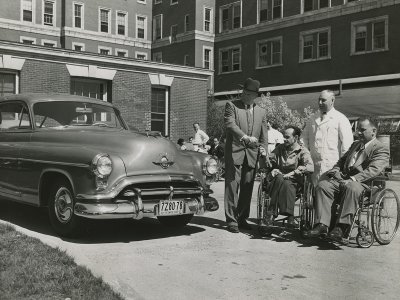
Early hand-controlled cars were hard to use because one hand steered while the other had to control levers for the brake, clutch, and throttle.
View images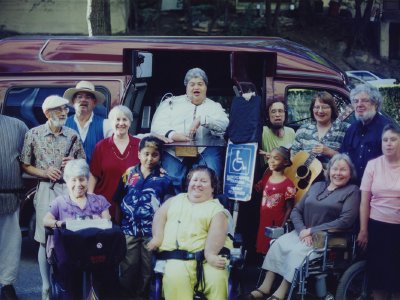
Parking
With inaccessible sidewalks and public transit, cars were the best way for people with mobility disabilities to get around by themselves.
View images