Buses
Today’s buses have low floors and ramps that fold out for wheelchair users. But older buses were much harder to use. They had steps that folded down and doubled as wheelchair lifts. The bus driver had to leave their seat, go to the back, and use a key to operate the lift. Then they had to secure the wheelchair in place. This took up to five minutes, making other passengers angry and embarrassing disabled riders.
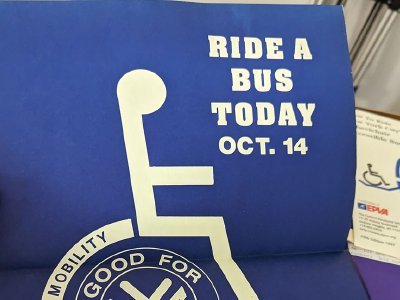
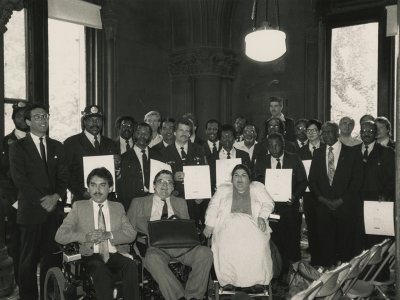
When the first accessible buses arrived, some drivers refused to use the lifts. Activists protested and started creative campaigns like “Ride A Bus Day” and “Bus Operator Awards” for helpful drivers.
Activism Milestones
- 1976: A federal funding bill required “special planning for mass transportation facilities and services to meet the needs of the elderly and disabled.”
- 1981: The MTA purchased its first wheelchair accessible buses. Only a few routes had accessible buses.
- 1984: After a lawsuit, the MTA agreed to make 50% of its bus fleet wheelchair accessible.
- 1990: The ADA requires all new buses to be wheelchair accessible.
- 1994: 100% of local buses operated by MTA are wheelchair accessible.
- 2016: The MTA pilots accessible information screens on buses, which makes navigation easier for deaf and hard-of-hearing passengers.
- 2022: A pilot program is launched to create additional space on buses for strollers while keeping wheelchair spaces intact.
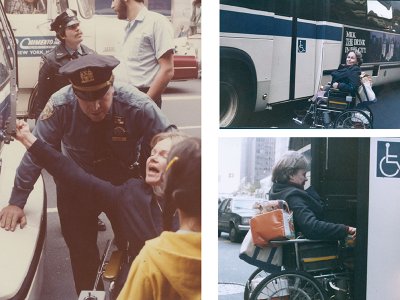
Refusals by bus operators
When the MTA bought its first accessible buses, drivers said they didn’t have enough training to operate the lifts and didn’t bring keys to use them.
View images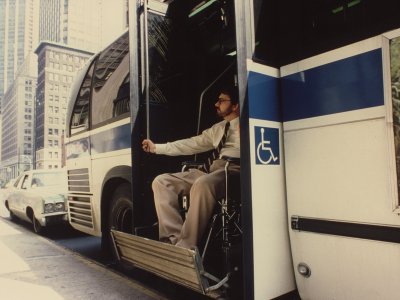
Low-floor buses
Early bus lifts were slow and hard to use. Older people who couldn’t climb steps easily also needed low-floor kneeling buses that were closer to the ground.
View images