Key Stations
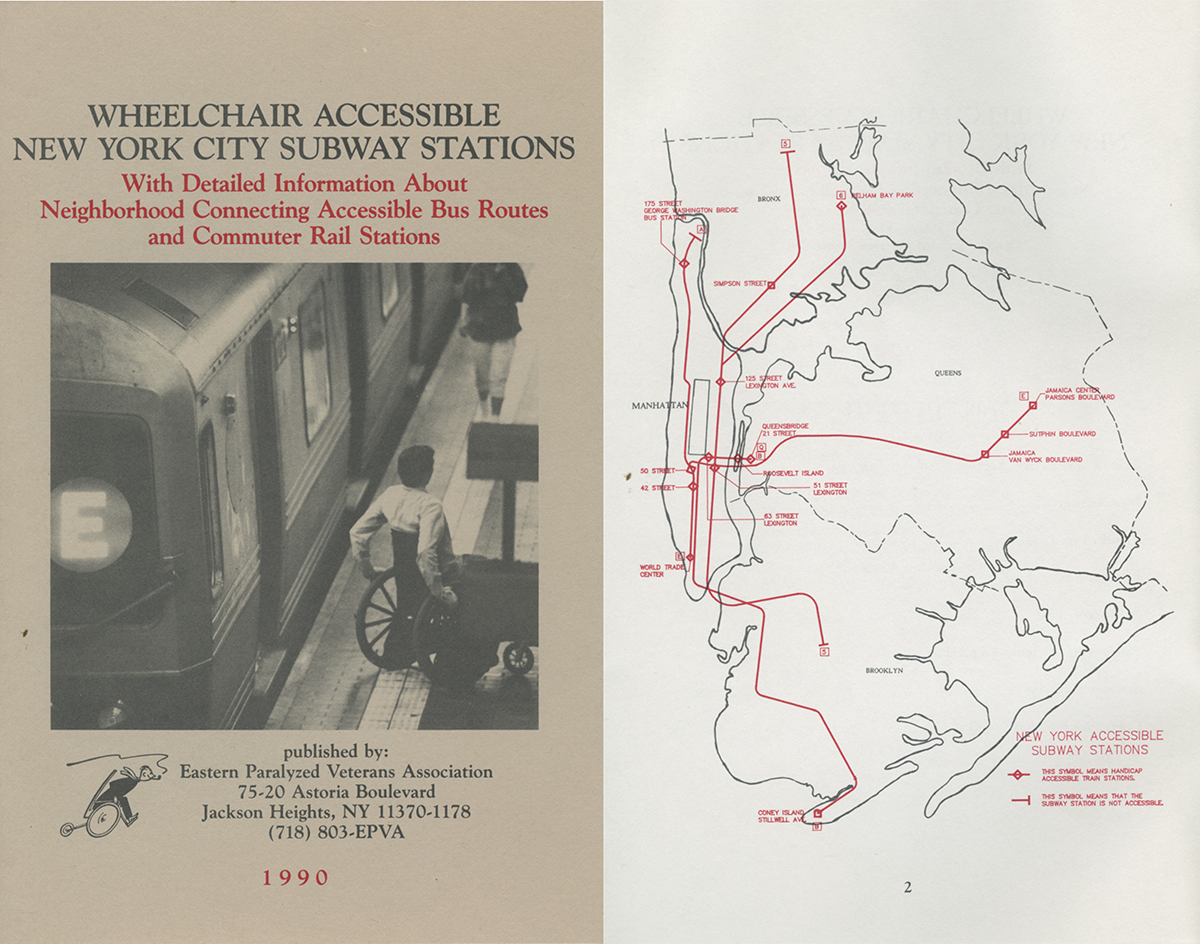
Date: 1990
Image Description: A side-by-side color scan showing the front cover and page 2 of a 1990 booklet. The beige cover on the left is titled “WHEELCHAIR ACCESSIBLE NEW YORK CITY SUBWAY STATIONS / With Detailed Information About Neighborhood Connecting Accessible Bus Routes and Commuter Rail Stations” above a black-and-white photo of a wheelchair user on a subway platform next to an E train, and credits at the bottom reading: “published by: Eastern Paralyzed Veterans Association, 75-20 Astoria Boulevard, Jackson Heights, NY 11370-1178, (718) 803-EPVA / 1990.” The right page displays a simplified map of New York City boroughs with red lines tracing select subway lines and diamond symbols marking the small number of accessible train stations in 1990.
Creator: Eastern Paralyzed Veterans Association (EPVA)
Source: Eastern Paralyzed Veterans Association (EPVA) Collection
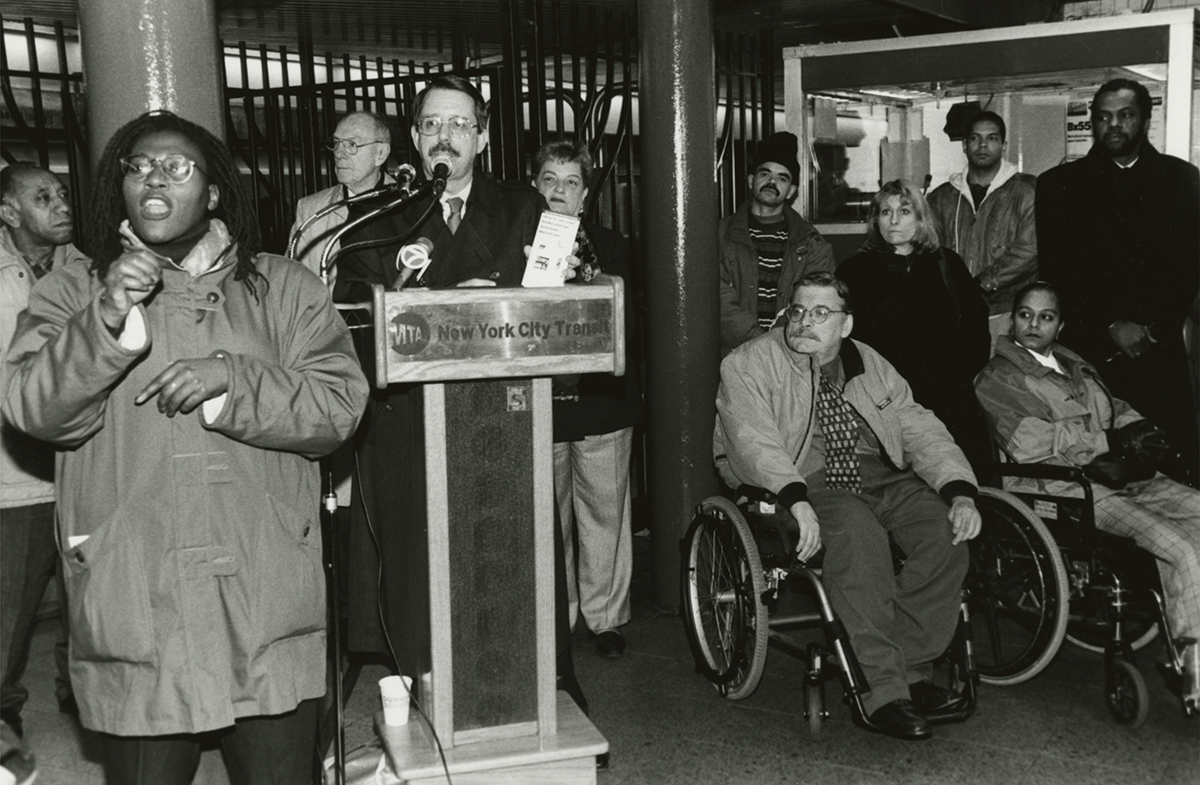
Date: c. 1980s
Image Description: A black-and-white photograph of a press conference held inside an early accessible New York City subway station in front of metal exit gates and a token booth. At center, a man with glasses, a mustache, and a dark trench coat speaks into microphones at a wooden podium bearing an “MTA New York City Transit” plaque while holding up an accessible subway stations pamphlet. To the left in the foreground, a Black woman with dreadlocks and glasses interprets in American Sign Language (ASL); to the right, two wheelchair users and several standing attendees look on.
Source: Eastern Paralyzed Veterans Association (EPVA) Collection