
Tactile edges and the gap
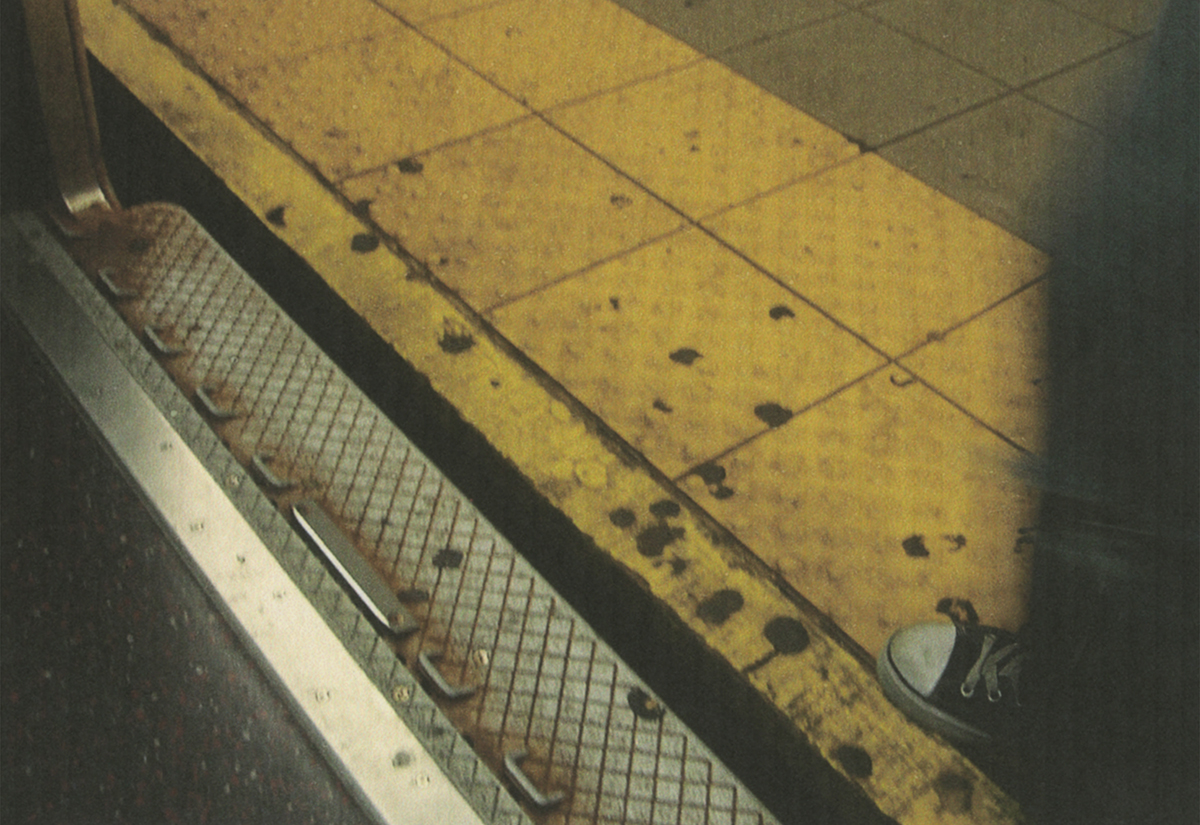
Image Description: A high-angle color photograph looking down at the threshold between an open subway car door on the left and the yellow tactile warning edge of a subway platform on the right, separated by a narrow gap over the tracks. The metal threshold plate of the train car has a diamond-plate texture, and the yellow platform edge tiles feature raised truncated domes. In the lower right corner, the toe of a passenger’s black-and-white canvas sneaker is visible stepping near the platform edge.
Source: Peggy Groce Collection
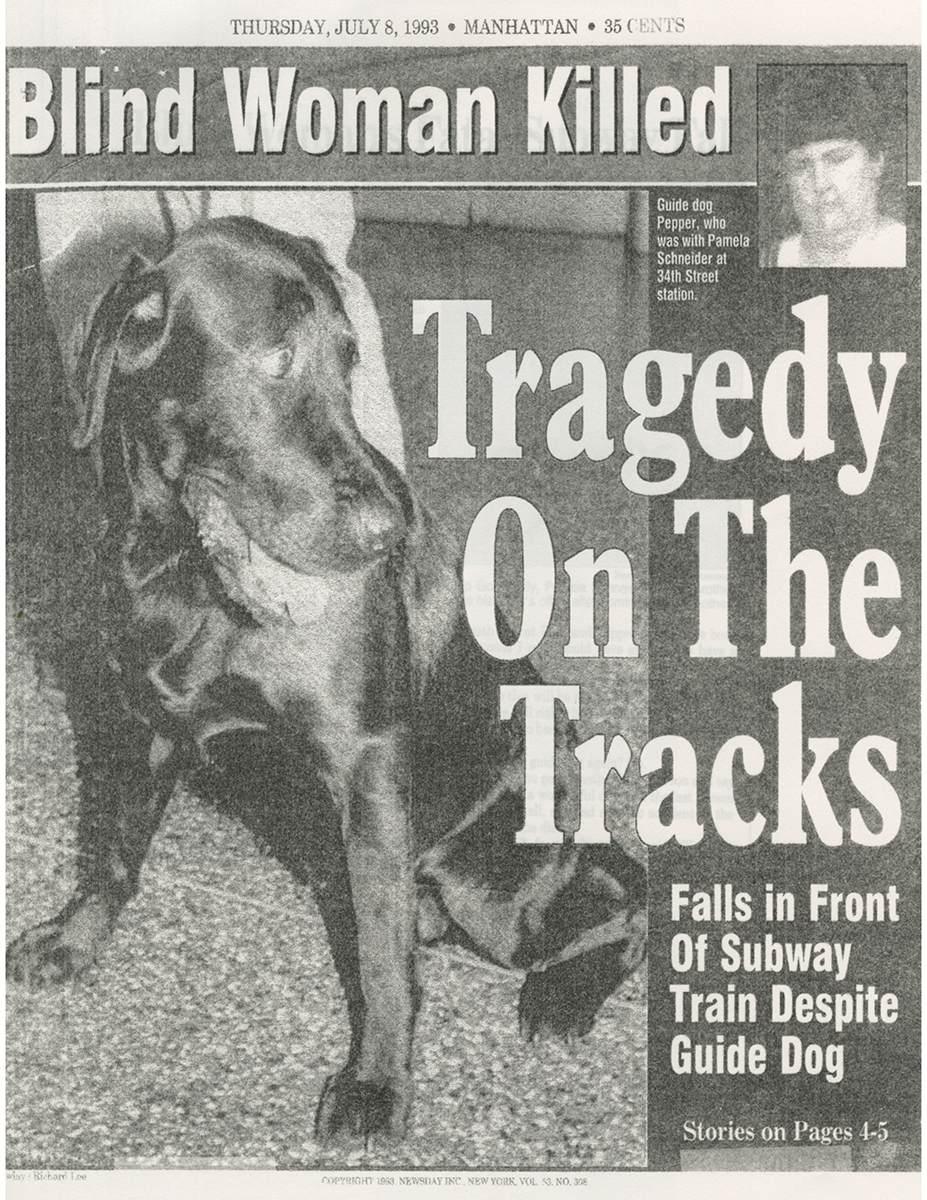
Image Description: A black-and-white scan of the front page of New York Newsday (Manhattan edition, Vol. 53, No. 308) dated Thursday, July 8, 1993. Across the top is the banner headline “Blind Woman Killed,” above a large main headline reading “Tragedy On The Tracks / Falls in Front Of Subway Train Despite Guide Dog.” The left side of the page is dominated by a large photograph by Richard Lee showing a dark-haired guide dog sitting on the ground, while an inset portrait at the top right shows Pamela Schneider with the caption: “Guide dog Pepper, who was with Pamela Schneider at 34th Street station.”
Creator: New York Newsday; Richard Lee (photographer)
Source: Disabled In Action (DIA) Collection