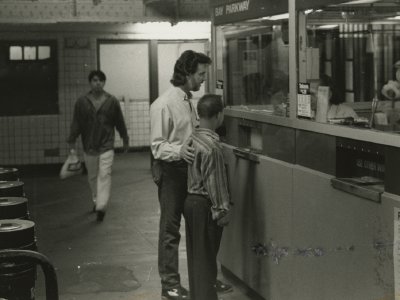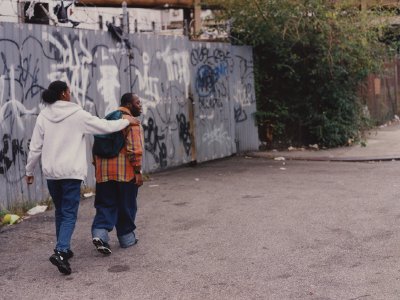
Travel Training
If people don’t know how to travel, they can’t access transportation. Most people learn to travel by going places with their family or on school trips. Sometimes we assume people know how to travel, but it’s not always easy. Information and signs can be confusing. Directions can be hard without clear landmarks or at different times of day. It’s easy to get distracted and miss a bus stop or get lost.
Some people benefit from training to help them travel independently. Travel training covers all types of transportation and teaches every part of a journey. A method for training anyone to travel was first developed in NYC in the 1960s and has become a model for other cities.
Activism Milestones
- 1959: AHRC NYC opens an Occupational Day Center for adults with intellectual and developmental disabilities to learn job skills.
- 1960: A travel training program is piloted at the AHRC Occupational Day Center in Manhattan with funding from the NIH.
- 1970: Travel training is formalized at the NYC Department of Education (NYC DOE).
- 1973: The NYPD works with NYC DOE Travel Training to create an ID card to help non-verbal disabled students communicate when they need help.
- 1979: NYC DOE Travel Training works with the NYC DOT to create a portable road intersection for teaching street crossing skills.
- 1982: EPVA and NYC DOE Travel Training helped familiarize disabled people with the bus system.
- 1994: The MTA partnered with outside groups to offer travel training for paratransit customers until 2020.
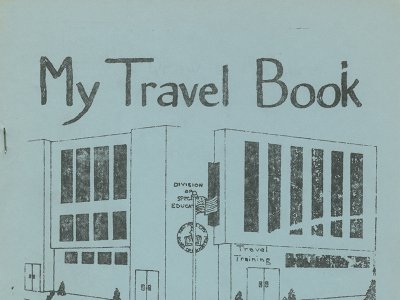
Travel Planning
When traveling somewhere new, you need to know how to plan your journey. Some trips involve many steps or require different types of transportation.
View images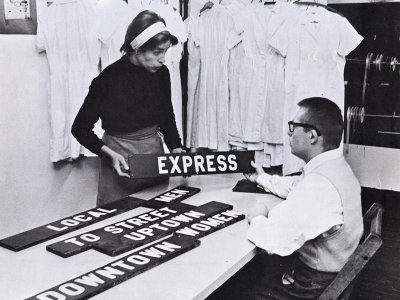
Navigating and understanding signage
Subways, buses, and streets each have their own system of information, so people can figure out which way to go. Streets have names or numbers.
View images