Walking
Walking connects people to places and other modes of transportation. People who use wheelchairs still “walk,” and they credit their freedom and independence to their wheelchairs. Archive donor Carr Massi remembered in an oral history interview how her father built a seat he could use to carry her from place to place when she was a child (before modern wheelchairs).
New Yorkers with disabilities have long fought for the right to personal mobility and independent travel. This means having access to personal mobility devices, ramps at curbs and building entrances, and audible and tactile signals for crossing the street.
Activism Milestones
- 1945: A veterans group asked the Kalamazoo, MI City Council to install curb cuts as a way to improve access to jobs.
- 1971: Disabled students at Brooklyn College called for ramps for sidewalks and building entrances on campus.
- 1994: EPVA sued the city for failing to meet an Americans with Disabilities Act deadline for installing curb ramps.
- 2019: After a lawsuit from the Center for the Disabled NY (CIDNY), the city agreed to make all intersections accessible by 2034, including tactile surfaces.
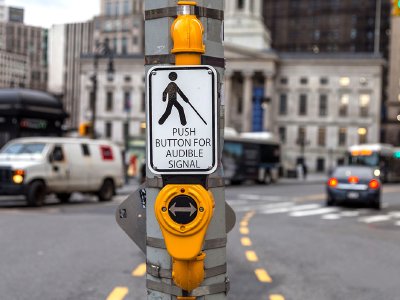
- 2022: The American Council of the Blind won a lawsuit against the city, which agreed to install Accessible Pedestrian Signals (APS) at all intersections by 2036.
- 2025: The “Consumer Wheelchair Repair Bill of Rights Act,” allowing wheelchair owners to make their own repairs, was introduced in the New York Senate.
Wheelchairs and mobility devices
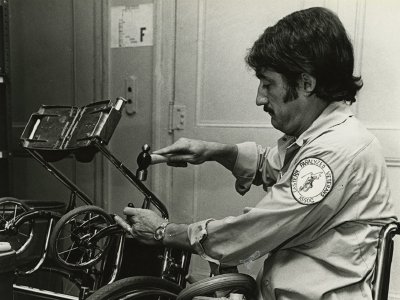
By the early 1970s, portable wheelchairs were widespread, and motorized wheelchairs were also in use. EPVA operated a mobile wheelchair repair clinic for many years.
View images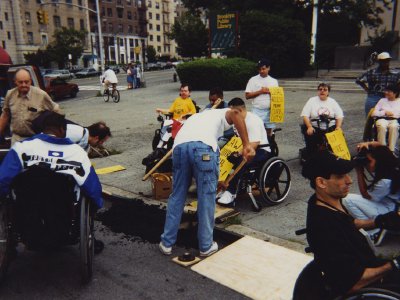
Curb Cuts
EPVA advocated for sidewalk ramps (curb cuts) after the Architectural Barriers Act of 1968. Broken sidewalks were also hazardous.
View images