Curb Cuts

Date: c. 1990s
Image Description: A black-and-white photograph of three individuals inspecting a large, hazardous hole in a cracked concrete sidewalk on a busy city street. A man wearing a three-piece suit and tie sits in a manual wheelchair in the center, looking down as a young man on the left—holding a clipboard and positioning a long metal level—and a young woman on the right crouch beside the deep depression to measure and point out the broken pavement. Several pedestrians walk along the sidewalk in the background.
Source: Disabled In Action (DIA) Collection
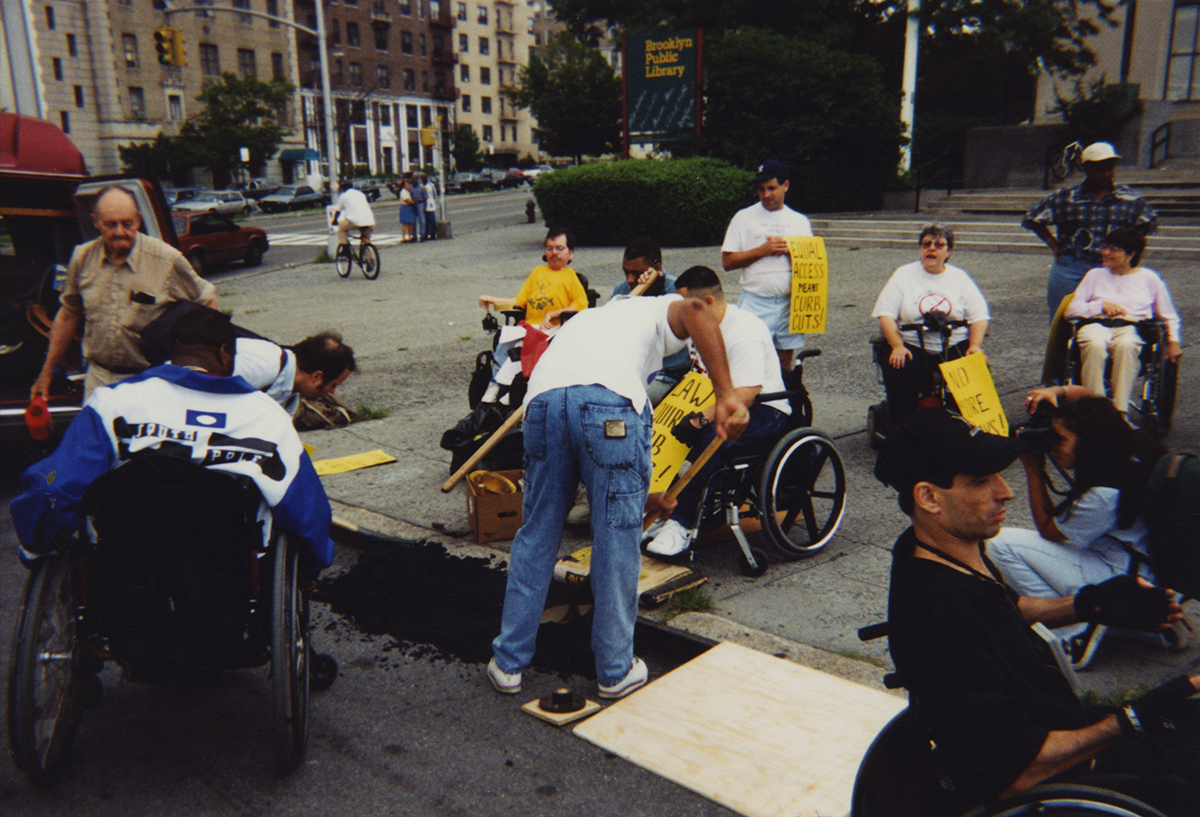
Date: c. 1970s
Image Description: A color photograph of disability rights activists building a makeshift curb ramp with asphalt and plywood at a sidewalk curb outside the Brooklyn Public Library. In the center, a person in a white t-shirt and jeans bends over to tamp down fresh black asphalt at the curb’s edge, surrounded by several wheelchair users, a photographer kneeling on the right, and an older man standing near a red van on the left. Protesters in the background hold yellow signs with black lettering that read “EQUAL ACCESS MEANS CURB CUTS!” and “LAW REQUIRES CURB CUTS!”, alongside another sign reading “NO MORE EXCUSES!”
Source: Eastern Paralyzed Veterans Association (EPVA) Collection
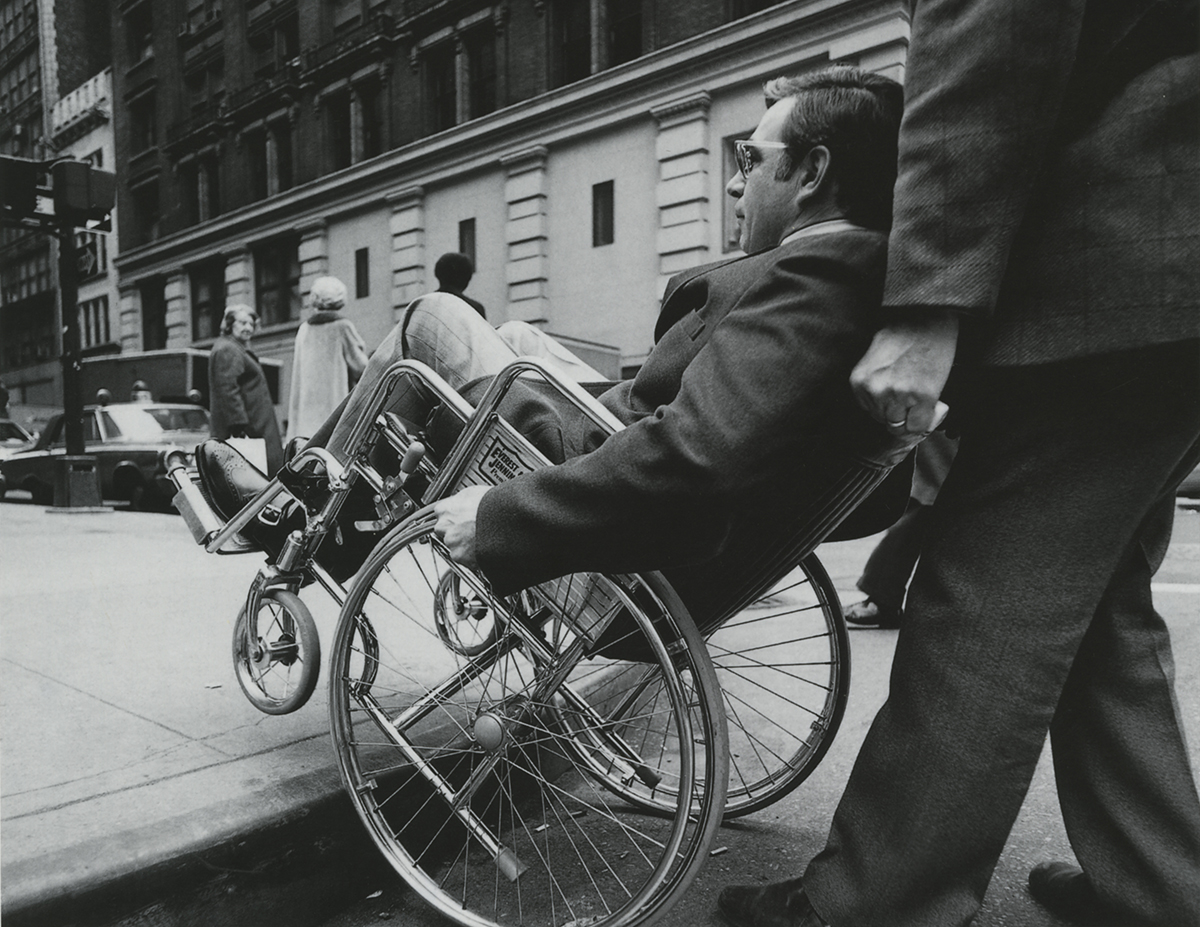
Date: c. 1970s
Image Description: A black-and-white side-profile photograph illustrating the physical barrier posed by uncurbed city sidewalks in the 1970s. A man wearing glasses and a dark overcoat sits in an Everest & Jennings manual wheelchair as another person in a suit stands behind him on the street, tilting the wheelchair sharply backward by its push handles so the front casters clear the high concrete curb. Pedestrians in coats and parked cars are visible across the street in front of a stone commercial building.
Source: Eastern Paralyzed Veterans Association (EPVA) Collection